
The Neuroendocrine Link Between PMOS and Depression
Polyendocrine Metabolic Ovarian Syndrome (PMOS), formerly known widely as Polycystic Ovary Syndrome (PCOS) is now recognised by global medical bodies as a systemic endocrine and metabolic disorder rather than a localised gynaecological issue. While the physical symptoms like insulin resistance, ovulatory dysfunction, weight fluctuations, hirsutism, and cystic ovaries are frequently discussed, the neuropsychiatric manifestations are often critically underdiagnosed and undertreated.
Clinical data indicates that up to 57% of women diagnosed with PMOS experience at least one psychiatric disorder, with Major Depressive Disorder (MDD) and Generalised Anxiety Disorder (GAD) topping the list. In highly competitive, fast-paced urban environments like South Delhi, the psychological burden of managing a chronic endocrine disorder can significantly accelerate mental health decline. The severe fluctuations in ovarian androgens, coupled with the systemic inflammation caused by metabolic dysfunction, directly impact neurotransmitter synthesis in the brain. Seeking a specialised reproductive psychiatrist is an essential component of managing the comprehensive clinical footprint of PMOS.
Why PMOS Dysregulates Mental Health
Depression linked to PMOS is inherently multifactorial, spanning biological, metabolic, and psychological pathways:
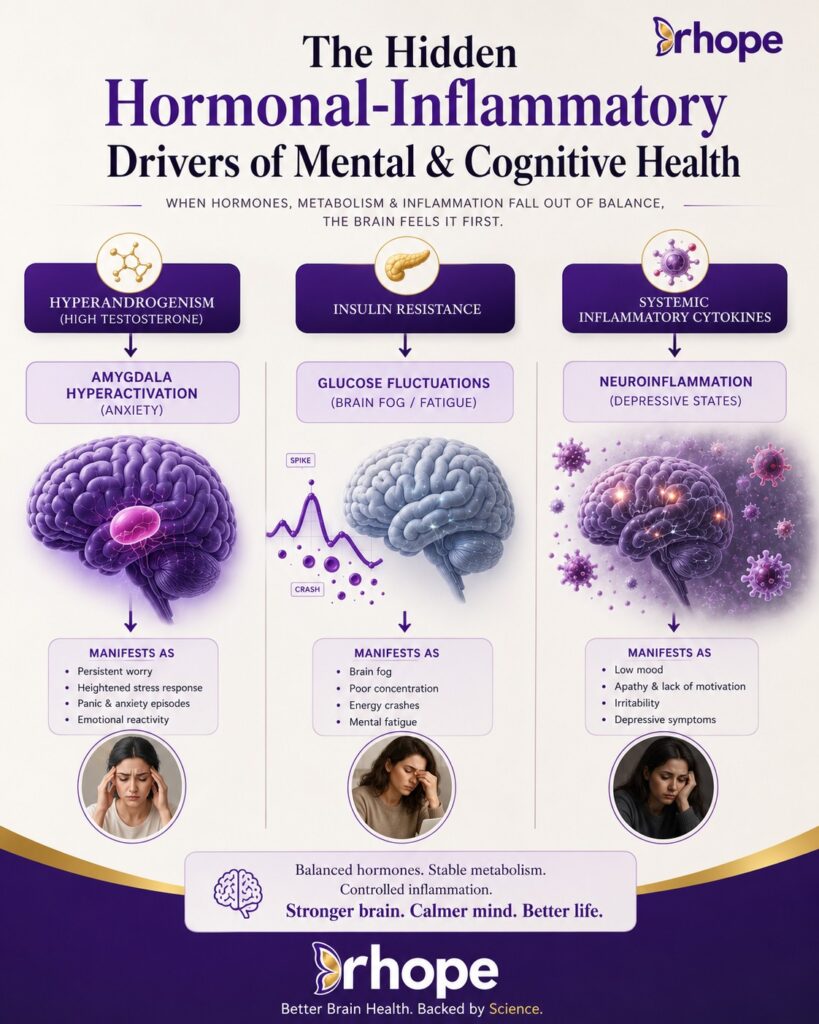
- Neuroendocrine Disruption: Elevated free testosterone and altered Luteinizing Hormone (LH) pulse frequencies alter functional connectivity within the brain’s middle frontal gyrus and hippocampus, disrupting mood regulation and working memory.
- Metabolic Depression: The cellular mechanics of insulin resistance cause severe fluctuations in blood glucose levels, manifesting cognitively as profound chronic fatigue, brain fog, and localised depressive lethargy.
- Somatic Distress & Body Image Schema: The physical presentations of hyperandrogenism, including severe cystic acne, androgenic alopecia (hair thinning), and rapid metabolic weight gain, induce profound cognitive dissonance, social anxiety, and a degraded self-concept.
- Inflammatory Pathways: PMOS is a pro-inflammatory state. High levels of systemic inflammatory cytokines can breach the blood-brain barrier, triggering neuroinflammation, which clinically correlates with refractory depressive symptoms and anhedonia (loss of pleasure).
Signs of PMOS-Driven Clinical Depression
Relational or standard depression differs slightly from endocrine-driven affective disorders. Look out for these localised symptoms:
- Cyclical Mood Volatility: Extreme irritability or sudden depressive crashes that coincide with or are exacerbated by highly erratic menstrual cycles.
- Atypical Depressive Features: Increased appetite (especially intense carbohydrate cravings driven by insulin drops), hypersomnia (oversleeping), and severe physical fatigue.
- Pervasive Social Anhedonia: Withdrawing from social circles in South Delhi due to acute body dysmorphia or low self-esteem related to rapid physical changes.
- Refractory Chronic Fatigue: Waking up entirely exhausted despite adequate hours of physical rest, combined with intense mental burnout.
- Persistent Threat-Monitoring: High baseline anxiety, persistent overthinking, and irrational panic loops surrounding long-term health, fertility, and relational security.
Top Rated Psychiatrists in South Delhi for PMOS-Linked Depression
Managing reproductive psychiatry requires cross-disciplinary awareness. The following are prominent mental health experts accessible across South Delhi known for treating complex metabolic and hormonal mood disorders:
| Psychiatrist / Clinic | Location / Affiliation | Core Clinical Focus |
| Dr. Neelesh Tiwari | RHOPE (Royal House of Psychiatry) Delhi NCR | Refractory Major Depression, Adult Psychopharmacology, Neurotransmitter Optimisation |
| Dr. Jitender Jakhar | Consultant Psychiatrist, South Delhi | Relational Resilience, Hormonal Depression, Behavioral Modification, Self-Esteem Restructuring |
| Dr. Anil Yadav | Senior Consultant Psychiatrist, Delhi | Refractory Major Depression, Adult Psychopharmacology, Neurotransmitter Optimization |
| Royal House of Psychiatry (RHOPE) | Specialised Clinical Network, Delhi | Multi-disciplinary Women’s Mental Wellness, Integrated Therapy & Psychiatric Support |
Evidence-Based Treatment Protocols
An effective clinical approach requires addressing both the endocrine imbalance and the altered psychiatric pathways simultaneously.
1. Targeted Psychopharmacology
Standard antidepressants may require precision tuning when managing PMOS. Psychiatrists typically leverage Selective Serotonin Reuptake Inhibitors (SSRIs) or SNRIs to raise serotonin and norepinephrine levels. Furthermore, if insulin resistance is pronounced, a psychiatrist will collaborate with an endocrinologist; stabilising metabolic function with medications like Metformin has been clinically shown to synergistically alleviate depressive symptoms by normalising brain glucose metabolism.
2. Specialized Cognitive & Somatic Psychotherapies
- Cognitive Behavioural Therapy (CBT): Focuses heavily on reversing the cognitive distortions stemming from body image issues, weight management challenges, and perceived loss of reproductive control.
- Acceptance and Commitment Therapy (ACT): Assists patients in developing psychological flexibility, decoupling their core self-identity from their physical medical diagnosis, and mitigating chronic health-related overthinking.
3. Comprehensive Lifestyle & Chronobiological Medicine
Regulating the circadian rhythm through strict sleep-wake architectures directly modulates melatonin and cortisol production, improving baseline mood. A low-glycemic, anti-inflammatory dietary protocol combined with structured resistance training serves to clear circulating androgens, reduce insulin resistance, and naturally stimulate endorphin production.
Comprehensive Frequently Asked Questions (FAQs)
1. What exactly is PMOS, and how does it differ from PCOS?
PMOS stands for Polyendocrine Metabolic Ovarian Syndrome. It is the modern, clinically accurate medical term replacing the older nomenclature PCOS (Polycystic Ovary Syndrome). The name was shifted because “PCOS” incorrectly suggested the condition was purely a gynaecological ovarian issue. “PMOS” accurately reflects that it is a whole-body metabolic, inflammatory, and multi-gland endocrine disorder that impacts metabolic health, fertility, and neuropsychiatric well-being.
2. Can PMOS directly cause clinical depression and anxiety?
Yes. PMOS causes systemic biochemical disruptions. The elevation of male hormones (androgens) like testosterone directly triggers structural changes in the brain’s emotional centre (the amygdala), leading to elevated anxiety and mood volatility. Furthermore, the insulin resistance and pro-inflammatory cytokines characteristic of PMOS directly induce neuroinflammation, which is strongly linked to clinical depression.
3. How do I know if my depression is caused by PMOS or standard life stress?
PMOS-driven depression is consistently accompanied by endocrine and metabolic markers. If your low mood, chronic fatigue, and intense anxiety occur alongside highly irregular menstrual cycles, sudden unexplained weight gain around the abdomen, severe cystic acne, thinning scalp hair, or persistent sugar cravings, your depression is likely anchored in the physiological shifts of PMOS.
4. What is the role of a reproductive psychiatrist in managing PMOS?
A reproductive psychiatrist specialises in the unique intersection where hormones, endocrine function, and brain chemistry overlap. Unlike a general psychiatrist, they possess specific training in how fluctuations in estrogen, progesterone, and androgens interact with psychotropic medications. They coordinate care directly with endocrinologists to treat the root hormonal imbalance alongside the psychiatric symptoms.
5. Can treating insulin resistance improve my mental health and depression?
Absolutely. Brain cells rely heavily on glucose for energy. When you have systemic insulin resistance, your brain struggles to efficiently convert glucose into mental energy, leading to clinical brain fog, profound fatigue, and depressive anhedonia. Clinical studies show that utilising insulin-sensitising agents (like Metformin) alongside lifestyle changes helps lift these depressive symptoms.
6. Why does PMOS cause such severe chronic fatigue and low motivation?
PMOS disrupts the body’s primary energy management systems. Insulin resistance means glucose remains trapped in the bloodstream rather than feeding your cells, leaving you physically drained. Additionally, the chronic stress of managing the syndrome exhausts the adrenal glands, leading to flattened cortisol rhythms that manifest as debilitating mental fatigue and low dopamine-driven motivation.
7. How does Cognitive Behavioural Therapy (CBT) help with PMOS-linked depression?
CBT targets the maladaptive thought loops and behaviours that develop from living with a chronic illness. For PMOS patients, CBT focuses on treating body dysmorphia or low self-esteem caused by acne or weight gain, dismantling feelings of hopelessness regarding fertility, and building sustainable, anxiety-free behaviour plans for health management.
8. Will taking standard birth control pills fix my PMOS-linked depression?
It depends entirely on the formulation and the individual’s unique biology. Some combined oral contraceptives flatten hormonal spikes and reduce androgen levels, which can stabilise mood swings for certain women. However, specific progestin formulations can actually worsen depressive symptoms in sensitive individuals. A detailed consultation with a reproductive psychiatrist is necessary to evaluate the optimal path.
9. Can PMOS cause panic attacks and severe generalised anxiety?
Yes. The hyperandrogenism (excess testosterone) and altered progesterone-to-estrogen ratios found in PMOS directly destabilise the body’s threat-detection network. This chemical state lowers the threshold for the nervous system to trip into a flight-or-fight response, resulting in spontaneous panic attacks, physical heart palpitations, and chronic generalised anxiety.
10. What are the best psychiatric medications for someone with PMOS?
First-line pharmacological treatments usually include Selective Serotonin Reuptake Inhibitors (SSRIs) or SNRIs, which effectively manage depression and anxiety without negatively impacting metabolic health. Psychiatrists carefully select agents that carry a low risk of metabolic side effects (like further weight gain or increased insulin resistance) to ensure they do not compound the physical symptoms of PMOS.
11. Is there a link between PMOS, depression, and sleep disorders?
Yes, a very strong one. The hormonal imbalances and weight fluctuations associated with PMOS significantly increase the risk of developing sleep disorders, particularly Obstructive Sleep Apnea (OSA) and chronic insomnia. Poor sleep architecture impairs the brain’s ability to regulate mood, drastically increasing the severity of next-day depression and emotional irritability.
12. How does neuroinflammation connect PMOS to depressive symptoms?
PMOS is characterized by a state of low-grade, chronic systemic inflammation. The body produces excess inflammatory proteins called cytokines. When these cytokines cross the blood-brain barrier, they cause mild neuroinflammation. This inflammatory process disrupts the brain’s ability to produce key mood-regulating neurotransmitters like serotonin and dopamine, inducing a chemical state of depression.
13. Can lifestyle changes alone cure depression linked to PMOS?
For mild cases of situational or early-stage endocrine distress, a highly structured regimen of low-glycemic nutrition, targeted supplementation (like Inositol or Omega-3s), and regular resistance training can dramatically lower insulin resistance and clear depression. However, for moderate-to-severe clinical depression or panic disorders, lifestyle changes should be paired with professional psychotherapy and psychiatric medicine.
14. How do I find a top-rated psychiatrist for PMOS in South Delhi?
Look for board-certified psychiatrists (MD or DNB in Psychiatry) who explicitly practice reproductive psychiatry, women’s mental health, or neuropsychiatric endocrine disorders. Ensure they are associated with reputable clinical networks in South Delhi, such as the RHOPE (Royal House of Psychiatry)or major private hospital systems like Fortis South Delhi.
15. What should I expect during my first consultation for hormonal depression?
Your psychiatrist will carry out a thorough diagnostic assessment that looks at both your mind and body. Expect detailed questions regarding your psychiatric symptom timeline, menstrual cycle regularity, physical symptoms (hair loss, acne, weight changes), current metabolic blood markers (HbA1c, fasting insulin, free testosterone), and any current endocrine treatments you are undergoing.
16. Can PMOS-related depression affect my memory and focus?
Yes. High levels of Luteinizing Hormone (LH) and free androgens are clinically proven to alter functional connectivity in the hippocampus, the brain’s primary engine for short-term memory and learning. This biological shift, combined with the metabolic energy drops of insulin resistance, often manifests as severe brain fog, forgetfulness, and poor daily focus.
17. Why does PMOS cause intense cravings for sugar and carbohydrates?
When your cells develop insulin resistance, they become desensitised to insulin, blocking them from absorbing glucose from your food. Because your cells are effectively starving for energy, your brain sends out urgent, primitive chemical signals demanding quick-release energy sources, resulting in uncontrollable cravings for sugar and simple carbohydrates.
18. Can online psychiatric consultations effectively treat PMOS-linked depression?
Yes. Online psychiatric consultations are highly effective for managing PMOS-linked depression and anxiety. Tele-health platforms offer an easy, private, and highly accessible way to consult with specialised South Delhi experts from the comfort of your home, reducing the scheduling stress or social anxiety that can sometimes prevent individuals from seeking care.
19. How does Dialectical Behaviour Therapy (DBT) fit into PMOS treatment?
DBT is incredibly useful for managing the severe emotional volatility and distress associated with hormonal crashes. It teaches rapid, actionable somatic tools (like temperature shifts or paced breathing) to down-regulate the nervous system during an emotional crisis, alongside mindfulness skills to manage the chronic stress of living with a metabolic disorder.
20. Is it possible to fully recover from PMOS-linked depression?
Yes, absolute clinical recovery is entirely achievable. Because depression is rooted in a combination of biological endocrine shifts and psychological distress, an integrated treatment approach that addresses both fronts yields exceptional success. By systematically managing your metabolic health, normalising brain chemistry via targeted psychiatry, and utilising therapy to rebuild confidence, you can successfully restore complete emotional and neurological well-being.
Disclaimer: This article is intended solely for educational and informational purposes and does not constitute formal medical or psychological advice. If you are experiencing severe psychological distress, severe panic attacks, or thoughts of self-harm, please reach out to a licensed healthcare professional or contact the emergency care team at the RHOPE (Royal House of Psychiatry)